
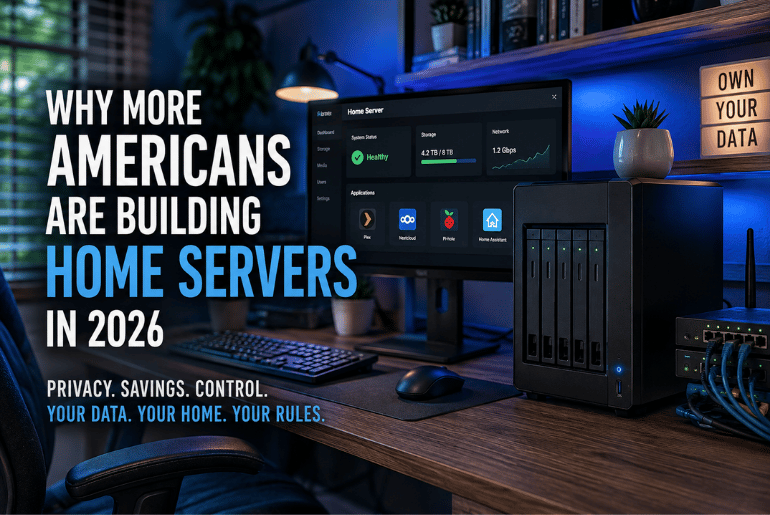
A growing number of Americans are moving away from relying entirely on cloud services and are instead building home servers to store files, stream media, back up family photos, and manage smart home devices. Once considered a hobby reserved for technology enthusiasts, home servers are quickly becoming a practical solution for households looking to gain greater control over their digital lives.
The trend is gaining traction as consumers look for ways to reduce monthly subscription costs, improve privacy, and create reliable storage systems that remain under their own control.
Home Servers Move Into the Mainstream
In recent years, cloud storage has become the default choice for many people. From photos and videos to personal documents and entertainment libraries, countless digital files now live on remote servers operated by large technology companies.
That convenience still appeals to millions of users, but a growing community is choosing a different path.
Compact home servers are now easier to build than ever before thanks to affordable hardware, user friendly software, and detailed online guides. What once required advanced networking knowledge can now be assembled by hobbyists with basic computer experience.
Why Privacy Is Driving Interest
Privacy has become one of the biggest reasons people are investing in home servers.
Instead of uploading personal files to third party platforms, users can keep family photos, financial records, and important documents stored inside their own homes. That level of control gives many consumers greater confidence about where their information is kept and who can access it.
For families with large collections of digital memories, keeping data on a personal server also reduces concerns about changing subscription plans or storage limits.
Cutting Monthly Subscription Costs
Another major factor behind the trend is the rising cost of digital services.
Many households now pay separate monthly fees for cloud storage, media streaming, password management, and photo backups. Over time, those recurring charges can add up.
A home server allows users to replace some subscription services with a one time investment in hardware, creating long term savings while expanding storage capacity.
Although not every online service can be replaced, many technology enthusiasts see home servers as a practical way to reduce recurring expenses.
More Than Just File Storage
Modern home servers can handle far more than simple backups.
Many owners use them to stream movies throughout the house, organize personal music libraries, host family photo collections, automate smart home systems, or create secure backup copies of important computers.
Some users even experiment with personal websites, game servers, and private cloud platforms, turning a small device into the center of an entire digital household.
Affordable Hardware Expands the Trend
The cost of building a capable home server has fallen significantly in recent years.
Compact computers, energy efficient processors, and larger hard drives allow users to build reliable systems without spending thousands of dollars. Preconfigured storage appliances have also simplified the process for people who prefer not to assemble a computer from scratch.
As equipment becomes more accessible, more households are exploring whether a home server fits their needs.
Technology Communities Continue to Grow
Online technology forums and creator communities have helped accelerate interest in self hosted computing.
Step by step tutorials, product reviews, and setup videos make it easier for beginners to learn about networking, storage management, and system security. Many first time builders say these communities have made the learning process far less intimidating.
That growing support network continues to introduce more Americans to the benefits of managing their own digital infrastructure.
Could Home Servers Become the Next Big Consumer Tech Trend?
While cloud services remain the preferred option for most consumers, home servers are carving out a growing place in the technology landscape.
The combination of greater privacy, long term savings, and increased digital ownership has made self hosting more attractive than ever. As hardware prices remain competitive and software continues to improve, industry observers expect interest in home servers to keep growing.
For many Americans, building a home server is no longer just a weekend technology project. It is becoming a practical investment in how they store, protect, and manage their digital lives.