
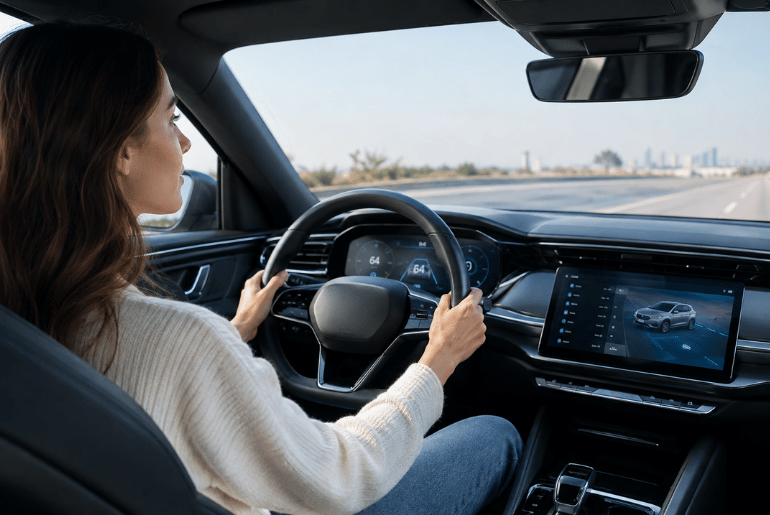
The modern car is no longer just an engine, transmission, four wheels, and a steering wheel. Technology is rapidly turning vehicles into sophisticated computing platforms, with software, sensors, processors, cameras, and connected systems playing a bigger role in how Americans drive.
That transformation is at the center of the Cars as Computers TechFest, a technology focused look at how computing is changing the automotive industry and the everyday driving experience.
The shift is especially noticeable in newer vehicles, where software can control everything from driver assistance and infotainment to battery management, navigation, climate settings, and vehicle diagnostics.
What Makes a Car a Computer?
A modern vehicle can contain numerous electronic control units that communicate with each other and process information from sensors throughout the car.
These systems can monitor speed, braking, acceleration, engine performance, battery conditions, temperature, and other vehicle functions. The information is processed in real time to help the vehicle respond to changing driving conditions.
For drivers, that means many features that once required direct mechanical control can now be managed by software.
Adaptive cruise control, automatic emergency braking, parking assistance, digital dashboards, voice controls, navigation, and connected services are all examples of how computing has become part of the driving experience.
Software Is Changing the Way Cars Are Built
One of the biggest developments in the automotive industry is the rise of software defined vehicles.
Instead of treating a car as a finished product when it leaves the factory, automakers are increasingly designing vehicles that can receive software updates and gain improvements after purchase.
Over the air updates can change vehicle features, improve performance, update interfaces, and address certain software problems without requiring a trip to a dealership. This approach makes a vehicle more like a connected consumer technology product than the traditional car Americans have known for decades.
The Dashboard Is Becoming a Digital Hub
The traditional dashboard has also undergone a major transformation.
Large touchscreens, digital instrument clusters, smartphone integration, voice assistants, wireless connectivity, and built in navigation have become increasingly common in newer vehicles.
For many drivers, the infotainment system is now one of the most visible signs that their car is functioning as a computer.
But the technology goes much deeper than the screen. Behind the dashboard, software and electronic systems can influence everything from vehicle diagnostics to safety features.
Artificial Intelligence Is Adding Another Layer
Artificial intelligence is also becoming an important part of the automotive technology conversation.
AI can help vehicles process information from cameras and other sensors, understand surroundings, assist drivers, and make predictions based on changing conditions.
As automakers continue developing advanced driver assistance systems, computing power becomes increasingly important. The vehicle needs to process large amounts of information quickly while maintaining reliable performance.
This is one reason the automotive industry is increasingly competing for software engineers, chip technology, data expertise, and computing capabilities alongside traditional mechanical engineering talent.
Cars Are Becoming Connected Devices
The connected car is another major part of the technology shift.
Modern vehicles can communicate with smartphones, cloud services, navigation systems, charging networks, and other digital platforms. Drivers can remotely check vehicle information, manage certain functions, receive updates, and access connected services.
That connectivity can make ownership more convenient, but it also creates new challenges involving cybersecurity and personal data.
As more vehicle functions become connected, automakers have to protect the systems that control and communicate with the vehicle.
What This Means for American Drivers
For drivers across the United States, the transition to computer based vehicles could change what it means to own and maintain a car.
A software update could potentially improve a feature without changing the physical vehicle. A new digital service could add functionality after purchase. Diagnostic information could help identify problems before they become major mechanical issues.
At the same time, drivers may have to become more familiar with software settings, digital subscriptions, privacy controls, and cybersecurity concerns.
The traditional dealership experience could also change as technicians increasingly need knowledge of electronics, computer networks, software diagnostics, and connected vehicle systems.
The Future of the Automobile Is Digital
The Cars as Computers TechFest reflects a much bigger transformation taking place across the automotive industry.
Cars are becoming increasingly dependent on software and computing power, while traditional mechanical engineering remains an essential part of the vehicle.
The result is a new kind of automobile that combines the familiar driving experience with technology more commonly associated with smartphones, computers, and connected devices.
For American drivers, the change is already showing up in the vehicles parked in driveways and traveling on highways across the country. As computing continues to move deeper into the automobile, the question is no longer whether cars are becoming computers.
It is how much more computing power the next generation of vehicles will bring to the road.