
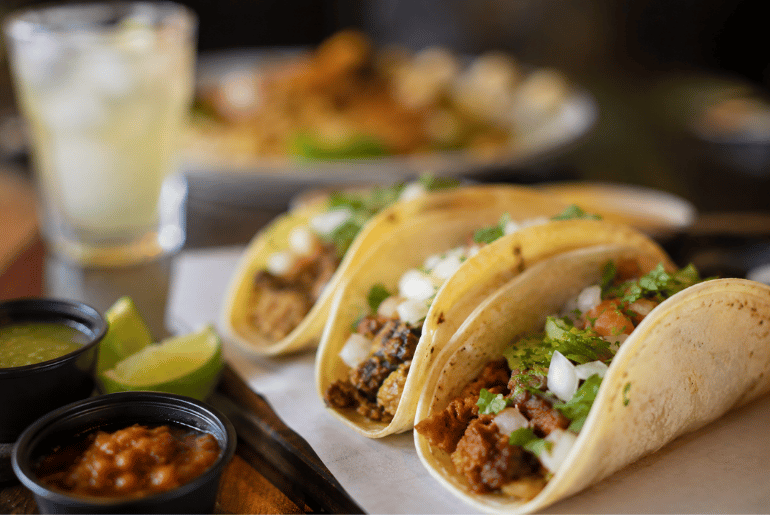
Taco Tuesday is now a familiar part of American food culture, but the weekly tradition did not begin as a holiday or official celebration. It grew from a simple restaurant marketing idea designed to bring customers in for taco specials.
As Mexican food became increasingly popular across the United States, restaurants began using Tuesday deals to attract diners on a traditionally slower night. The catchy phrase eventually became much bigger than the promotions that helped popularize it.
The Early Roots of Taco Tuesday
The exact origin of Taco Tuesday is more complicated than one restaurant or one decade.
Historical references show that restaurants were promoting taco specials on Tuesdays decades before the phrase became a national catchphrase. By the 1970s, “Taco Tuesday” was appearing in print and becoming more recognizable to American diners.
The formula was simple. Restaurants offered tacos at a special price, customers got an inexpensive midweek meal, and businesses had a reason to increase traffic on Tuesday nights.
Why Tuesday Became Taco Night
Tuesday was an ideal day for a restaurant promotion.
Monday had already developed its own reputation as the start of the workweek, while Friday and Saturday were traditionally busy nights for restaurants. Tuesday offered businesses an opportunity to create a reason for customers to come through the door.
Tacos were also a natural fit for the promotion. They could be prepared quickly, sold at a low promotional price and offered in quantities that made a special deal attractive to families, students and workers.
The catchy name made the idea even easier to remember.
Taco John’s Helped Popularize the Tradition
One of the most important chapters in Taco Tuesday history involved Taco John’s.
A franchise operator in Wyoming developed a Tuesday promotion in the late 1970s that offered customers two tacos for 99 cents. The promotion was initially called “Taco Twosday,” but the concept eventually became associated with the phrase “Taco Tuesday.”
Taco John’s later obtained a federal trademark for “Taco Tuesday” in 1989 for restaurant services in much of the United States.
The trademark would eventually become one of the most unusual stories in the history of restaurant marketing.
Taco Bell Takes On the Trademark
In 2023, Taco Bell launched a campaign challenging Taco John’s claim to the phrase.
Taco Bell argued that “Taco Tuesday” had become a common expression that should be available for everyone to use. The campaign received widespread attention and turned a familiar restaurant phrase into a national trademark story.
Taco John’s ultimately agreed to give up its federal trademark, allowing businesses and consumers across the country to use “Taco Tuesday” without facing the same trademark restrictions.
From Marketing Trick to Weekly Ritual
The lasting success of Taco Tuesday shows how effective a simple restaurant promotion can become.
What started as a way to sell more tacos on a Tuesday eventually became a phrase recognized by millions of Americans. Restaurants continue to offer taco specials, while families and friends often use Tuesday as an excuse to make tacos at home.
The phrase has also become common in advertising, sports promotions, social media and pop culture.
Why Americans Still Love Taco Tuesday
Part of Taco Tuesday’s appeal is its simplicity.
It does not require a complicated celebration or an official event. The idea is simply that Tuesday is a good night for tacos.
That makes it easy for restaurants to promote and easy for customers to embrace. A discounted taco dinner can turn an ordinary weekday into something people look forward to.
A Marketing Idea That Became Part of American Culture
Taco Tuesday is a reminder that some of America’s most recognizable traditions can begin with something as simple as a restaurant promotion.
The phrase survived because it was easy to remember, easy to market and connected to a food that became increasingly popular across the country.
Today, Taco Tuesday is much more than a discount offered by restaurants. It has become a familiar piece of American food culture, proving that a clever marketing idea can sometimes outlive the promotion that created it.