
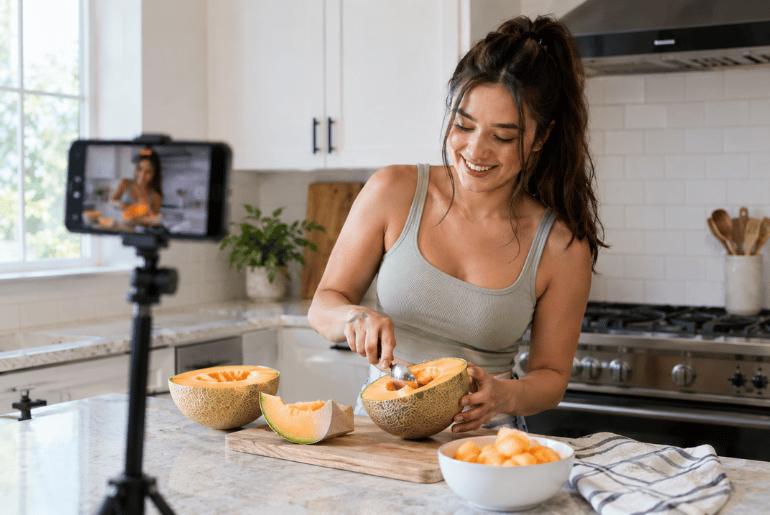
California’s cantaloupe industry is taking an unexpected route to get younger Americans interested in one of the produce aisle’s longtime staples: TikTok.
The California Cantaloupe Advisory Board has launched a new consumer marketing campaign designed to introduce cantaloupe to Gen Z through short-form videos, food trends, recipes, humor and behind-the-scenes looks at California farms.
The effort reflects a broader shift in how agricultural industries are trying to reach younger shoppers. Instead of relying primarily on traditional advertising or nutrition-focused messaging, California cantaloupe growers are putting farmers, harvests and creative food ideas directly into social media feeds.
Why Cantaloupe Is Showing Up on TikTok
For the California cantaloupe industry, the challenge is not producing the fruit. It is getting younger consumers excited about buying it.
Marilyn Freeman, president of Farmers Communication Exchange, said the industry’s traditional customer base tends to be older, while some younger shoppers see cantaloupe as an old-fashioned fruit.
The new campaign is designed to change that perception by making cantaloupe part of the social media conversation.
Videos are being created specifically for platforms such as TikTok and Instagram, with an emphasis on entertainment rather than conventional produce advertising. The campaign features farmers, harvest footage, recipes, humorous content and quick demonstrations designed to make the fruit look more approachable to younger shoppers.
A Frozen Cantaloupe Trend Is Part of the Strategy
One of the campaign’s more unusual ideas involves turning a frozen cantaloupe into an ice cream-like treat.
The concept involves freezing half of a cantaloupe, adding cream or half-and-half and then scraping the chilled fruit into a scoopable dessert.
It is exactly the kind of simple food idea that can work well in short-form video because the transformation is easy to understand and visually interesting.
California Cantaloupes has also promoted a “Viral Melon Ice Cream” concept on its social media channels, showing how the industry is looking beyond traditional fruit salads and breakfast plates for new ways to present the melon.
California Growers Are Becoming Part of the Content
The campaign is not just about recipes.
California growers and farm families are appearing in videos to show younger consumers where their food comes from.
The marketing effort includes footage from working farms, harvest scenes and conversations with growers. The idea is to make the people behind the fruit part of the story rather than treating the cantaloupe as an anonymous grocery store product.
That approach also gives the campaign a more personal feel. Instead of simply telling shoppers to buy California cantaloupe, the industry is showing the farms, families and workers responsible for getting the fruit to stores.
The Campaign Has Already Seen a Big Digital Jump
The strategy appears to be getting attention online.
According to the California Cantaloupe Advisory Board’s campaign materials, impressions, video views, link clicks and engagement have increased by roughly 700 percent to more than 2,000 percent compared with the previous marketing campaign.
The campaign is being supported by a Specialty Crop Block Grant from the California Department of Food and Agriculture, giving the industry additional resources for creative production and targeted digital advertising.
A team of Gen Z content creators is also producing original material intended specifically for younger audiences. Fresno-based Backstory Creative is leading video production for the campaign.
California Has a Big Stake in the Cantaloupe Business
The campaign matters beyond social media because California is a major source of cantaloupes consumed in the United States.
Industry representatives say California produces about 75 percent of U.S. cantaloupes during the summer months. That makes the state especially important to the domestic market when its growing season is in full swing.
For growers, building demand among younger shoppers could have long-term value.
The industry has also faced declining production over the past several years, making it increasingly important to maintain consumer demand and introduce the fruit to a new generation of shoppers.
The Industry Wants Younger Shoppers to Rethink Cantaloupe
Part of the campaign is aimed at changing perceptions about the fruit itself.
Freeman said newer cantaloupe varieties are generally crisper and sweeter than some consumers may remember. The campaign is also trying to move shoppers away from the idea that selecting a good cantaloupe requires a complicated inspection process.
That message is being delivered alongside recipes and entertaining videos rather than as a traditional produce lesson.
The goal is straightforward: make someone stop scrolling, see an interesting cantaloupe video and decide to put one in their grocery cart.
A Three-Year Push for a New Generation
This is not intended to be a one-season TikTok experiment.
The specialty crop grant supports a three-year effort, giving the California Cantaloupe Advisory Board time to produce more content, test different approaches and build an audience that can continue following the industry after the current growing season.
The campaign is active across TikTok, Instagram, Facebook, X and Pinterest, giving California cantaloupe growers several ways to reach consumers beyond the grocery store.
For an industry built around a familiar fruit, the strategy is surprisingly modern.
California growers are betting that a few entertaining videos, a viral recipe and a closer look at life on the farm can turn cantaloupe from an overlooked grocery store staple into something younger shoppers actually want to talk about.