
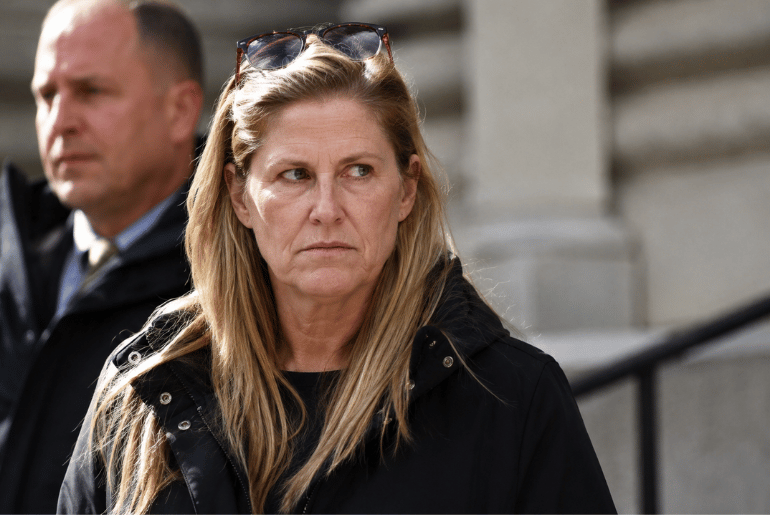
A retired Massachusetts nurse accused of filming jurors in the closely watched Lindsay Clancy murder trial is suddenly finding herself at the center of the attention she had been seeking at the courthouse.
Dawn Light, 56, of Sutton, was arrested Tuesday after authorities accused her of recording jurors as they left Plymouth Superior Court. She pleaded not guilty Wednesday to a charge involving intimidation of a witness, juror or person furnishing information in connection with criminal proceedings.
Light was later released without having to post cash bail, but a judge ordered her to stay away from the courthouse, jurors and witnesses connected to the Clancy case. She is scheduled to return to court October 15.
The Moment That Sent Social Media Talking
Outside the courthouse, reporters pressed Light about the sudden attention surrounding her arrest.
When asked how she felt about becoming a celebrity, Light reportedly giggled.
The brief reaction quickly became part of the online conversation surrounding the case, with critics interpreting it as a sign that she was amused by the attention.
Still, a reaction on camera does not establish what Light was thinking or whether she feels remorse. The criminal allegation itself also remains unresolved because she has pleaded not guilty.
Why Dawn Light Was Arrested
Massachusetts State Police say Light was in a restricted area near the courthouse while jurors were leaving following another day of deliberations.
Prosecutors allege she recorded members of the Clancy jury with her phone. Authorities reportedly found video of jurors in a deleted section of the phone after searching it.
Light has offered a different explanation.
She told reporters that she was at the courthouse because she wanted to see Lindsay Clancy and attempted to record Clancy leaving the building. Light said she realized she had filmed someone else and lowered her phone. Her attorney has described the incident as a misunderstanding and said Light was trying to photograph Clancy, not interact with jurors.
Why the Charge Is So Serious
Juror privacy is a major issue in any criminal trial, but the stakes are particularly high in the Clancy case.
The jury has already spent several days deliberating over whether Clancy is criminally responsible for the deaths of her three children. On Tuesday, jurors told Judge William Sullivan they were unable to reach a unanimous decision before being instructed to continue deliberating.
Massachusetts law makes it a crime to intimidate or harass jurors and other participants in criminal proceedings when the conduct is intended to interfere with the proceeding. When the underlying prosecution involves a crime punishable by life imprisonment, the statute allows for a maximum state prison sentence of up to 20 years.
That is the legal basis behind reports that Light could face as much as 20 years if convicted, although a maximum statutory penalty is not the same thing as a likely sentence.
Light Described Herself as a True Crime Fan
The case has attracted another layer of attention because Light has been described as a self-proclaimed true crime enthusiast.
Reports say she has followed other high-profile American criminal cases and was a supporter of Clancy. That interest appears to have brought her directly to the courthouse during one of the most consequential moments of the trial.
Now, instead of simply watching a nationally followed criminal case, Light has become part of it.
The Clancy Jury Was Already Under Pressure
Light’s arrest came at an especially sensitive point in the proceedings.
The Clancy jury entered its fifth day of deliberations Wednesday after previously telling the judge it was deadlocked. Judge Sullivan questioned jurors individually about the alleged filming incident and reinforced restrictions designed to protect them from outside contact or harassment.
The jurors were ultimately permitted to continue deliberating.
The incident has therefore raised obvious questions about whether an outside person’s alleged conduct could affect the integrity of a trial that is already facing an uncertain verdict.
Her Attorney Says It Was a Misunderstanding
Light’s defense has rejected the suggestion that she intended to intimidate the jury.
Her attorney, Jennifer White, said Light was attempting to photograph Clancy and had no intention of interacting with jurors. The defense has emphasized that Light has no prior criminal record.
A prosecutor, however, described the matter as serious and argued that conduct involving jurors threatens the integrity of the judicial process. Prosecutors sought $50,000 in cash bail, but the judge instead released Light on her own recognizance with strict conditions.
Why the Celebrity Comment Is Going Viral
The legal allegations are the substance of the story, but the celebrity exchange is what has given the case a distinctly viral edge.
The juxtaposition is striking. A woman who allegedly went to a courthouse hoping to see a defendant in a nationally followed murder trial is now receiving widespread attention herself after being arrested in connection with the same proceeding.
Her giggle when asked about becoming a celebrity has made that irony even more noticeable.
But whether the reaction reflects amusement, nervousness, disbelief or something else is ultimately a matter of interpretation.
The Bigger Issue Is Protecting the Jury
The most consequential part of the story is not the viral interview.
It is whether jurors were photographed or recorded in violation of court restrictions and whether the conduct was intended to interfere with the proceeding.
The judge has already questioned the jurors and allowed deliberations to continue, suggesting the court does not currently view the incident as grounds to automatically end the trial.
Light’s criminal case will now proceed separately, with her next court appearance scheduled for October.
What Happens Next
For now, Light remains accused, not convicted.
She has pleaded not guilty and maintains that the incident was a misunderstanding. Prosecutors will have to prove the allegations against her in court.
Meanwhile, the Lindsay Clancy jury remains at the center of one of Massachusetts’ most closely watched criminal trials, continuing deliberations after previously reporting that it could not reach a unanimous verdict.
The unusual result is that a woman who arrived at the courthouse as a spectator has now become part of the national story herself.