
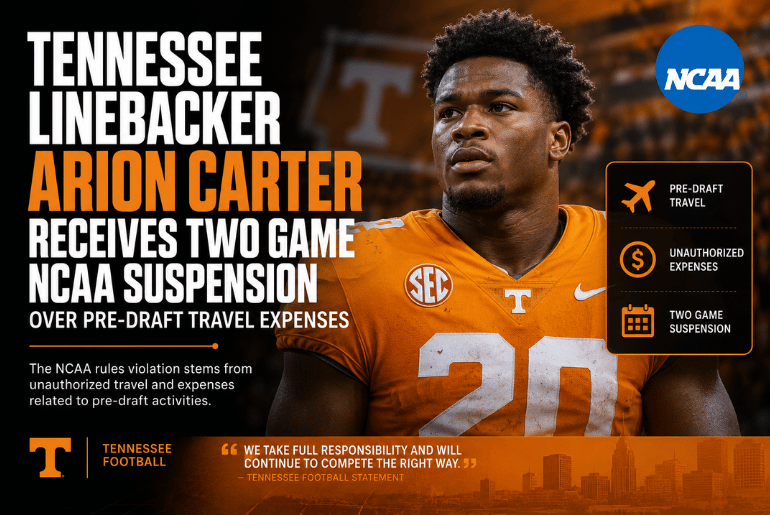
KNOXVILLE, Tenn. Tennessee linebacker Arion Carter will miss the Volunteers’ first two games of the upcoming college football season after the NCAA ruled that a pre draft travel expense paid by an NFL agent violated eligibility rules.
The decision has sparked widespread discussion across the college football community because the violation involved a $427 flight that Carter later repaid after withdrawing from the NFL Draft and returning to Tennessee.
The case has become one of the latest examples of the complex compliance issues facing student athletes as college sports continue to evolve in the era of expanded athlete compensation and transfer flexibility.
How the Eligibility Issue Developed
According to reports, Carter entered the NFL Draft process and worked with an agent while preparing for the possibility of turning professional. During that period, the agent paid for a flight valued at $427 to an NFL pre draft training facility.
Carter later decided to return to Tennessee after withdrawing from the draft because of a medical concern. He also ended his relationship with the agent and reimbursed the full cost of the flight.
Despite the repayment, the NCAA determined that the expense constituted an eligibility violation and imposed a two game suspension.
Tennessee Voices Frustration
The ruling quickly drew criticism from Tennessee officials, who questioned whether the punishment matched the circumstances of the case.
Head coach Josh Heupel publicly expressed support for Carter, describing him as a player with strong character who handled the situation responsibly after deciding to return to school.
Many fans echoed similar concerns on social media, arguing that Carter corrected the issue by repaying the expense and should not face additional discipline.
NCAA Rules Remain Under the Spotlight
The suspension has renewed debate over how NCAA eligibility rules apply to athletes who explore professional opportunities before deciding to continue their college careers.
Although college athletics has undergone significant changes through name, image, and likeness opportunities, student athletes must still comply with specific regulations involving agents, financial benefits, and professional representation.
The Carter case highlights how relatively small expenses can still trigger eligibility consequences under existing NCAA rules.
Impact on Tennessee’s Defense
Carter has become an important part of Tennessee’s defensive unit, making his absence notable as the Volunteers begin a new season with high expectations.
Missing the opening two contests will require Tennessee to rely on additional depth at linebacker while Carter serves the suspension.
The coaching staff will likely adjust defensive rotations until he becomes eligible to return later in the schedule.
College Football Community Reacts
The decision has generated discussion throughout the college football landscape, with analysts, former players, and fans debating whether current NCAA regulations adequately reflect today’s environment.
Some believe the rules remain necessary to preserve competitive integrity, while others argue they should be modernized to account for athletes navigating professional opportunities before returning to campus.
The conversation also reflects broader questions about consistency in NCAA enforcement as the governing body continues adapting to major changes across college athletics.
Looking Ahead
Once his suspension is complete, Carter is expected to rejoin the Volunteers and resume his role on defense for the remainder of the season.
While Tennessee prepares for its opening games without one of its key defenders, the broader discussion surrounding the NCAA’s decision is likely to continue. The case serves as another reminder that eligibility rules remain an important factor for athletes balancing college careers with aspirations of playing at the professional level.