
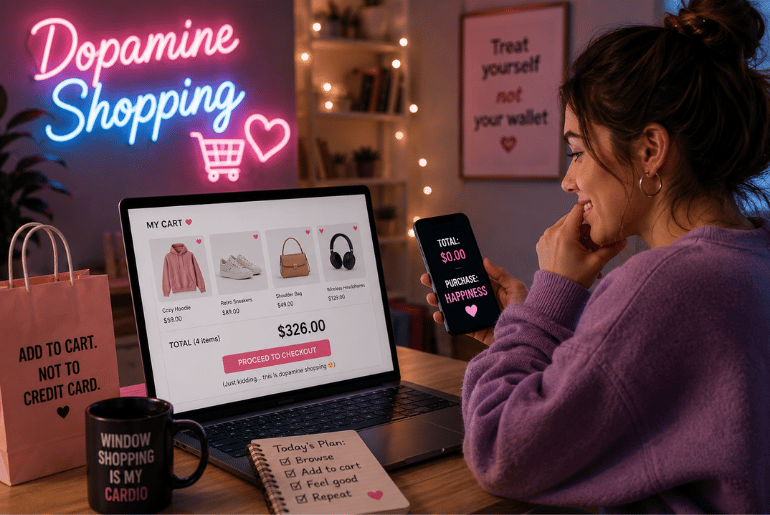
NEW YORK , A growing number of young Americans are turning to a new online trend known as “dopamine shopping,” a practice that delivers the thrill of filling a shopping cart without the financial regret that comes with clicking the checkout button.
The trend has gained momentum across social media platforms as users share screenshots of virtual carts packed with sneakers, clothing, gadgets and home decor that they never actually purchase.
Instead of spending money, users browse products, customize orders and build wish lists before closing the tab and walking away with their bank accounts untouched.
The Trend Targets Impulse Spending
Financial experts say the appeal is simple.
Online shopping often triggers short bursts of excitement linked to browsing, discovering deals and imagining ownership of a product. Many users report that much of the enjoyment comes before the payment screen ever appears.
Dopamine shopping attempts to capture that feeling while removing the financial consequences that frequently follow impulse purchases.
Some websites have even begun marketing themselves specifically around the concept, offering realistic shopping experiences designed to mimic online retail stores without processing actual transactions.
Social Media Fuels the Movement
Videos demonstrating the trend have attracted millions of views as creators show off elaborate shopping carts filled with dream purchases they have no intention of buying.
Many participants describe the practice as a way to scratch the shopping itch during periods of rising living costs and tighter personal budgets.
Others compare it to window shopping at a mall, updated for an era dominated by smartphones and ecommerce platforms.
Younger Consumers Face Budget Pressures
The trend arrives as younger Americans continue facing high housing costs, student loan payments and increased prices across everyday expenses.
For some consumers, recreational browsing has become a substitute for retail therapy that does not require dipping into savings or adding credit card balances.
Personal finance creators have increasingly promoted the strategy as a low risk way to reduce unnecessary spending while still enjoying the entertainment value of shopping.
Retailers Are Paying Attention
Some ecommerce companies are beginning to explore features that encourage product discovery and wish list building even if purchases do not happen immediately.
Industry analysts say those interactions can strengthen brand awareness and increase the chances of future sales when shoppers are ready to spend.
At the same time, retailers must balance engagement strategies with concerns that consumers may become comfortable browsing without converting into paying customers.
A Digital Version of Window Shopping
While it remains unclear whether dopamine shopping will become a long term consumer habit, the trend reflects changing attitudes toward spending among younger generations.
For many users, the satisfaction comes not from opening a package on the doorstep but from enjoying the experience of browsing without the guilt that can arrive with the monthly credit card statement.
In an economy where every dollar feels increasingly important, that may be enough to keep the trend growing.