
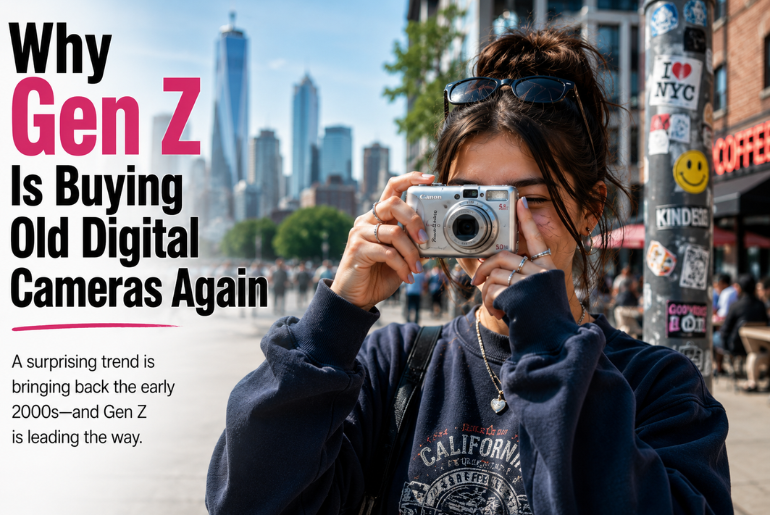
NEW YORK Walk through Brooklyn, Austin, Nashville, or Santa Monica this summer and you might notice something unexpected. Young people are carrying digital cameras that look like they belong in a family vacation album from 2007.
At a time when smartphones can capture professional-quality photos and videos, Gen Z is fueling a surprising comeback for compact digital cameras. Devices that once sat forgotten in desk drawers and storage bins are now becoming must-have accessories for a new generation.
From music festivals and baseball games to weekend road trips and coffee runs, old point-and-shoot cameras are showing up everywhere.
The trend has become one of the most talked-about developments in youth culture, blending nostalgia, technology, and social media into a growing movement that continues to gain momentum across the United States.
A Break From Smartphone Perfection
For years, smartphone manufacturers have competed to offer sharper images, stronger zoom capabilities, and advanced editing tools.
Many Gen Z consumers, however, are moving in the opposite direction.
They are embracing the grainy flash photos, softer colors, and slightly imperfect images that older digital cameras produce.
The result feels more authentic to many young users.
Instead of carefully edited content designed to look flawless, digital camera photos often capture moments exactly as they happened.
That authenticity has become increasingly valuable in an online environment where heavily filtered content dominates many social feeds.
Social Media Is Fueling Demand
Ironically, social media is one of the biggest reasons old digital cameras are making a comeback.
Videos showcasing vintage camera photos regularly attract millions of views on TikTok and Instagram. Influencers share side-by-side comparisons between smartphone images and pictures taken with decade-old cameras.
Many viewers are drawn to the distinctive aesthetic.
The photos often resemble snapshots from family vacations, high school football games, summer road trips, and backyard cookouts.
For younger Americans, the look feels fresh even though the technology itself is not.
As interest grows, resale marketplaces have reported increased demand for older camera models that were once considered outdated.
Nostalgia Sells
The resurgence is part of a larger nostalgia wave sweeping through American culture.
Fashion trends inspired by the early 2000s have returned. Vinyl records continue to sell. Retro gaming systems remain popular. Now digital cameras are joining the list.
Many Gen Z consumers grew up seeing photos taken with these devices in family albums and on early social networking sites.
Buying one today offers a connection to that era while creating a visual style that stands apart from modern smartphone photography.
Cultural analysts say younger consumers often embrace products from previous decades because they offer experiences that feel different from today’s highly connected world.
More Than Just Photos
For many users, carrying a separate camera changes the way they document their lives.
Instead of taking dozens of photos and instantly posting them online, digital camera users often wait until later to review their pictures.
That delay creates a sense of anticipation that many smartphone users rarely experience.
Some photographers say the process encourages people to focus more on the moment itself rather than constantly checking screens.
The experience feels slower, simpler, and more intentional.
Those qualities are increasingly appealing to young adults who spend much of their day connected to digital platforms.
A Growing Market
The renewed interest has created opportunities for secondhand retailers and online sellers.
Popular camera models that once sold for pocket change at garage sales are now commanding significantly higher prices online.
Some electronics stores have even begun highlighting older camera inventory to meet growing demand.
Industry observers believe the trend could continue well into 2027, particularly as nostalgia remains a powerful force in consumer behavior.
Looking Ahead
Technology trends typically focus on what comes next. The digital camera comeback suggests many young Americans are also interested in what came before.
For Gen Z, the appeal is not necessarily about rejecting smartphones. Instead, it is about finding new ways to capture memories and express creativity.
In a world filled with ultra-high-definition images and instant uploads, an older digital camera offers something different.
And for a growing number of young Americans, different is exactly what they are looking for.