
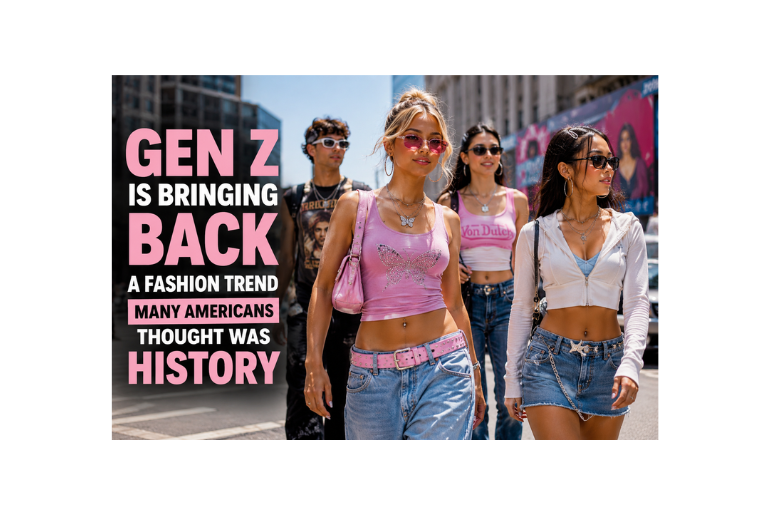
NEW YORK — Just when fashion insiders thought the era of ultra-glam, body-conscious style had been packed away for good, Gen Z is bringing it back.
Across the United States, younger shoppers are embracing fashion trends inspired by the late 1990s and early 2000s, signaling a shift away from the oversized hoodies, baggy sweatpants, and athleisure looks that dominated much of the past decade.
From Los Angeles boutiques to New York streetwear districts, a new generation is rediscovering fitted silhouettes, bold accessories, and statement pieces that many fashion experts once considered relics of a different era.
The trend has become increasingly visible on social media, where influencers and everyday users alike are posting outfit inspiration centered around Y2K-era aesthetics. What started as a niche online movement has evolved into a broader fashion revival that is now influencing major retailers and apparel brands.
“It’s a complete cycle,” said fashion analyst Rebecca Morgan. “Every generation wants to put its own spin on the styles that came before it. What we’re seeing now is Gen Z taking elements of early-2000s fashion and making them feel current again.”
The End of the Oversized Era?
For much of the early 2020s, comfort ruled American fashion. Oversized clothing, relaxed fits, and casual everyday wear became staples in wardrobes across the country.
But recent consumer trends suggest that younger shoppers are looking for something different.
Fashion retailers have reported growing interest in more structured designs, fitted tops, denim styles inspired by earlier decades, and accessories that stand out rather than blend in.
The shift reflects a broader desire among younger consumers to express individuality. While minimalist fashion remains popular, many Gen Z shoppers are gravitating toward styles that feel more personal, nostalgic, and visually distinctive.
Social Media Fuels the Comeback
Platforms like TikTok and Instagram have played a major role in accelerating the trend.
Fashion creators regularly share vintage-inspired outfits, thrift-store finds, and side-by-side comparisons between classic celebrity looks and modern interpretations. These videos often attract millions of views, introducing younger audiences to trends they were too young to experience the first time around.
For many Gen Z consumers, the appeal is not necessarily about recreating the past. Instead, it is about reimagining it.
A style that once appeared dated can quickly become desirable when viewed through a contemporary lens. Social media allows trends to move faster than ever before, giving old ideas a chance to find entirely new audiences.
Retailers Are Paying Attention
Major fashion brands are already adapting to changing tastes.
Department stores, specialty retailers, and online fashion companies have expanded collections featuring vintage-inspired designs and Y2K influences. Industry analysts say the trend has become too significant for brands to ignore.
Retailers are particularly focused on younger consumers, who continue to drive conversations around fashion trends and online shopping behavior.
“Gen Z has tremendous influence over what becomes popular,” Morgan said. “When a trend gains traction with younger shoppers, brands move quickly to respond.”
A Broader Cultural Shift
The resurgence of early-2000s fashion reflects more than changing wardrobe preferences. It also highlights a larger cultural fascination with nostalgia.
Across entertainment, music, technology, and consumer products, Americans have shown renewed interest in revisiting familiar styles and experiences from previous decades.
Fashion appears to be following the same pattern.
As economic uncertainty and rapid technological change continue shaping everyday life, nostalgic trends often provide a sense of familiarity and comfort. For younger consumers, those styles also offer something fresh and different from the fashion norms they grew up with.
What’s Next?
Fashion experts caution that trends are always evolving, and today’s revival could eventually give way to something entirely different. However, few expect the current nostalgia wave to disappear anytime soon.
With social media continuing to amplify vintage-inspired looks and retailers investing heavily in Y2K-inspired collections, the trend appears positioned to remain a major force throughout 2026.
For now, one thing is clear: a fashion trend many Americans believed had faded into history is enjoying an unexpected comeback, thanks largely to a generation that wasn’t even old enough to wear it the first time around.